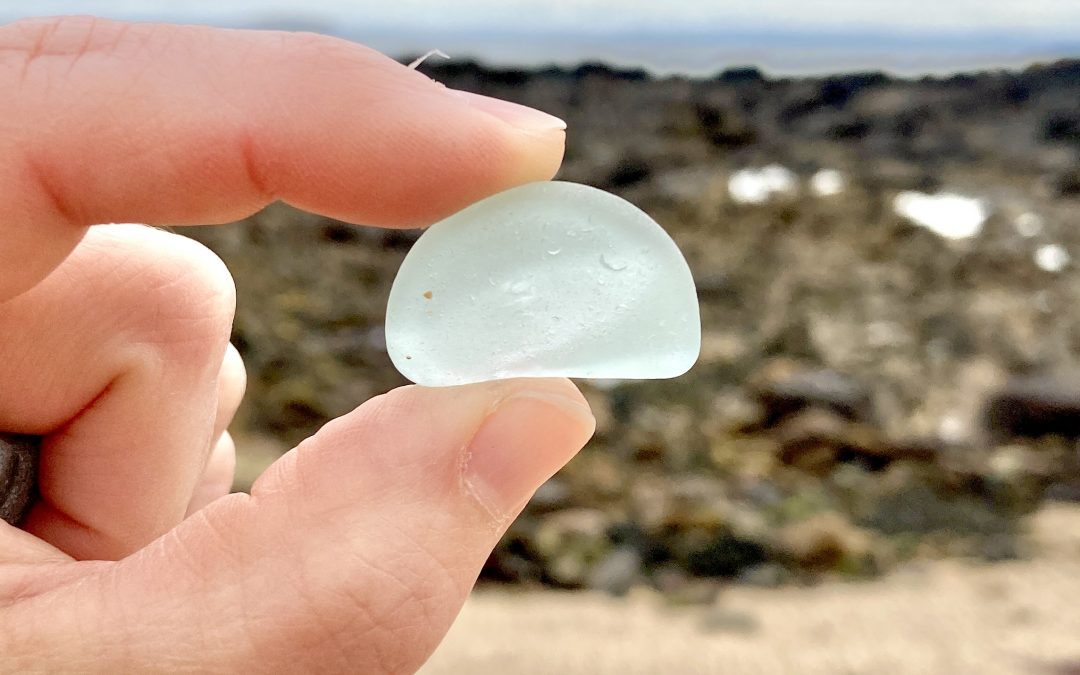
There’s something quietly magical about finding a smooth, frosted piece of sea glass among the pebbles on a Scottish beach. What was once a discarded bottle, jar or window has been reshaped by time, tides and sand into a gem-like fragment — ready to be turned into something beautiful again.
At the Central Scotland School of Jewellery (CSSJ), based in Dunblane, we use sea glass in our jewellery making workshops not only for its natural beauty, but for its sustainability and the story each piece carries. 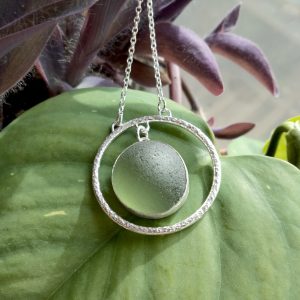
What is sea glass?
Sea glass begins as ordinary glass that has made its way into the sea, often decades — sometimes centuries — ago. Over time, the movement of waves smooths the sharp edges, while sand and saltwater gently frost the surface, creating the soft, matte finish we recognise.
Scottish coastlines are particularly rich in sea glass. Beaches across Fife, East Lothian, the Moray Coast and the Isle of Skye often yield a wide range of colours. Soft whites and greens are most common, while rarer blues and deep ambers are especially prized.
One of the reasons sea glass feels so satisfying to collect is that, unlike shells or other natural materials, it doesn’t belong on the beach in the same way. Shells play a role in coastal ecosystems, providing habitat and gradually breaking down to support the shoreline. Sea glass, on the other hand, began as waste.
Collecting it is a small, positive act — a way of removing something that doesn’t naturally belong, while giving it a new purpose. It’s one of the rare instances where taking something from the beach can feel entirely appropriate, even helpful.
The environmental value of sea glass
In a world increasingly aware of waste and pollution, sea glass offers a small but meaningful example of renewal. At CSSJ, sustainability sits at the heart of our teaching, and sea glass is an environmentally positive material to work with:
- Recycled by nature
Each piece is waste transformed by the sea into something worth keeping.
- No new resources required
Unlike mined gemstones or newly manufactured materials, sea glass already exists — using it reduces demand for new production.
- Encourages awareness
- Discovering that a piece of jewellery began as discarded glass often opens up conversations about ocean health and responsible waste.
- Supports mindful collecting
Searching for sea glass turns a walk along the beach into a slower, more observant experience, encouraging a closer connection to the coastline.
Why sea glass works so well in jewellery 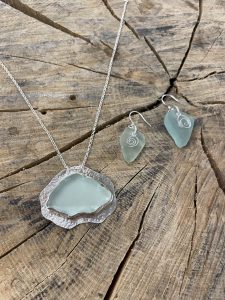
Every piece of sea glass is shaped by years of natural movement, which makes it particularly rewarding to use in handmade jewellery.
- Each piece is unique
No two fragments share the same shape, colour or texture, so every finished piece is one of a kind.
- It pairs naturally with silver
The soft, frosted surface of sea glass contrasts beautifully with polished or oxidised sterling silver, creating simple, coastal-inspired designs.
- Accessible for beginners
Sea glass is already smooth and safe to handle, so there’s no need for cutting or faceting — making it ideal for those new to jewellery making.
- It carries a story
Wearing sea glass jewellery is a subtle way to carry a piece of Scotland’s coastline with you.
Try a sea glass jewellery workshop in Scotland
If you’re looking for a creative, hands-on experience in Scotland, our jewellery making workshops in Dunblane offer the chance to turn sea glass into a finished piece of jewellery. Suitable for beginners and visitors alike, these workshops fit easily into a day trip from Stirling, Edinburgh or Glasgow.
Whether you bring your own beach finds or choose from our collection, you’ll leave with a handmade keepsake and a deeper understanding of the material.