How to Make a Silver Bangle: Skills, Common Problems and Simple Fixes
Making a bangle is a great project for students who are new to jewellery making. Bangle workshops are almost as popular as our ring classes; however, if you can already make a silver ring, you have all the core skills needed to make a silver bangle.
In fact, many people find bangles easier. Rings require precise sizing, whereas bangles are more forgiving. If you can saw cleanly, file to a flat 90° edge, and solder confidently, you’re well equipped to create a well-made bangle.
That said, there are a couple of common issues that often catch people out.
Why does my bangle join move during soldering?
A frequent problem we see in our weekly jewellery classes is that a perfectly aligned bangle join shifts during soldering, leaving an uneven seam.
This usually happens because the metal has been work-hardened through texturing or forming. As the piece heats up, it begins to anneal and relax, which can cause the join to move slightly out of alignment.
How to fix it
- If the join has shifted, you can cut through it, file both ends flat again, and re-solder.
- To reduce the risk of movement, anneal (and pickle) your bangle before soldering so the metal is already relaxed.
- With practice, you could make small adjustments to the area while the solder is molten, using tweezers in your dominant hand.
It’s worth practising this on copper first. When focusing on the join, it’s easy to accidentally overheat another part of the bangle.
Why won’t my bangle solder properly?
The most common issue for people working at home is insufficient heat.
Small handheld torches (such as cook’s torches) are ideal for many jewellery tasks, but they are often not powerful enough for larger pieces like bangles. As a result, the solder won’t flow properly, no matter how long you heat the piece.
In most cases, the problem isn’t your technique — it’s the equipment.
What torch do you need for soldering bangles?
For larger jewellery projects, a more powerful torch is usually required.
At the Central Scotland School of Jewellery, we use a Seivert Beginners Torch Kit connected to a propane tank. This provides the consistent heat needed to solder larger forms such as bangles.
However, this type of setup comes with additional safety considerations and may not suit every home studio.
Alternatives to soldering at home
If you don’t want to upgrade your equipment, there are other options:
- Prepare your bangles at home, then solder them in our fully equipped studio in either a Bench Rental or Supported Session
- Join a structured class where equipment and guidance are provided
Learn to Make Silver Bangles at CSSJ
If you’d like to build confidence with bangle making, our jewellery workshops and weekly classes provide access to the right tools, materials and support.
You’ll learn how to:
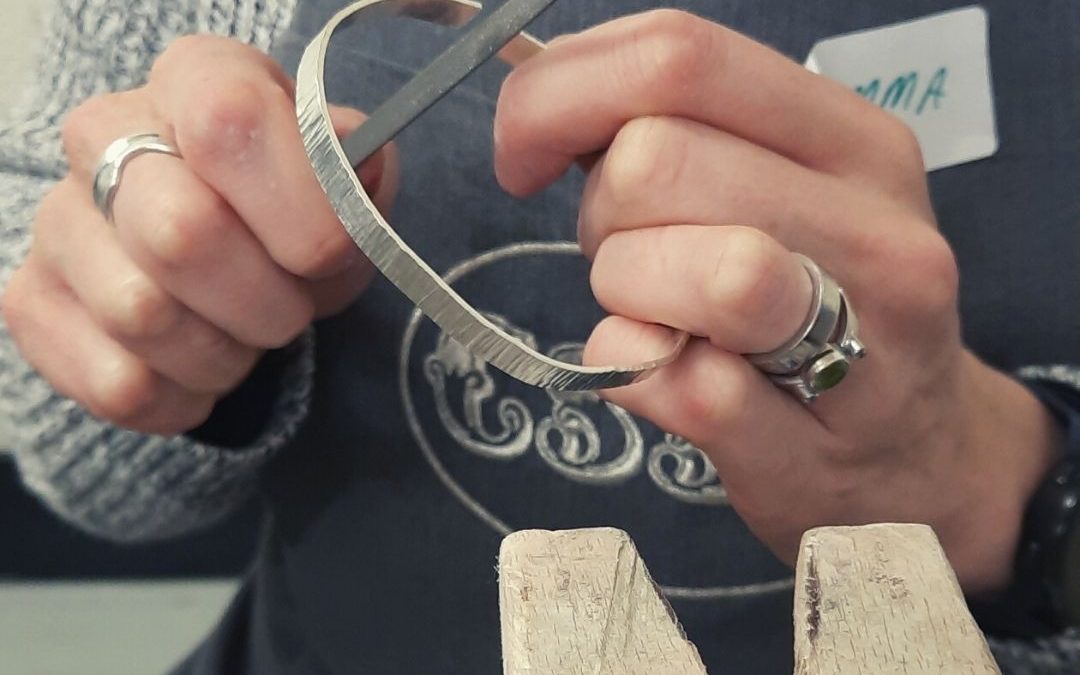
- texture and shape bangles
- achieve clean, well-aligned joins
- solder safely and effectively
- troubleshoot common problems
View upcoming classes and workshops here:
https://cssj.co.uk/weekend-workshops/
Stay safe and happy making!